

What is remote? Who is remote?
There is a strange arrogance in cities.
An assumption that the world begins where the streetlights glow brighter, where Wi-Fi signals are stronger, where ambulances arrive in minutes, where hospitals rise like fortresses of certainty and pharmacies remain open through the night.
Beyond this radius of convenience lies a word we use carelessly: “remote”
But what is remote?
And more importantly, who is remote?
Is a village remote because it stands far from the capital city? Or is the capital remote because it stands far from the realities of the village? Perhaps remoteness is not geography at all. Perhaps it is measured instead in neglect, in invisibility, in the distance between those who design systems and those forced to survive without them.
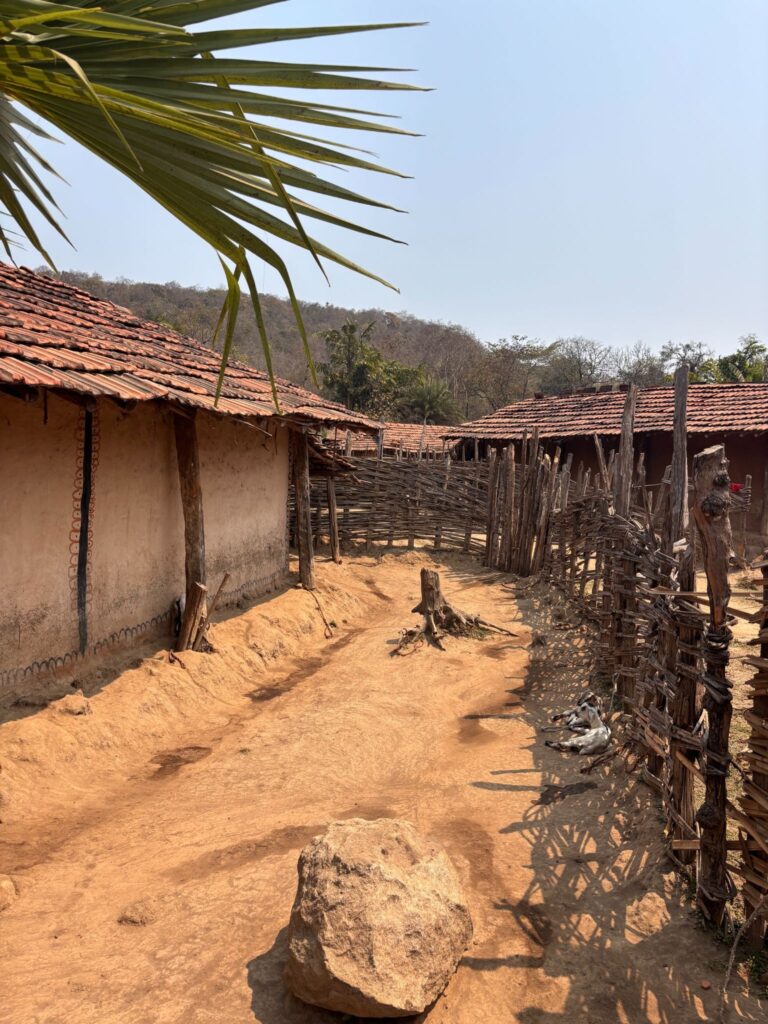
In India, the word “remote” carries dust on its shoulders. It smells of red mud roads after rain, of long bus journeys through uneven terrain, of electricity that flickers like an uncertain promise, of water access being a privilege. It evokes images of tribal settlements hidden behind forests, fishing villages abandoned after cyclones, dry farmlands split by drought, and mountain hamlets where winter isolates entire communities. These places are not empty edges of the nation. They are its pulse.
The irony is profound though, the places called “remote” are often the places closest to the fundamentals of life.
In cities, healthcare is almost invisible in its availability. A fever means a nearby clinic. A chest pain means an emergency room. Medicines can be delivered home before symptoms worsen. Diagnostic scans, specialist consultations, blood tests, ICUs etc. all exist within reachable distance, as though modern medicine itself bends conveniently around urban lives.
But in rural places, healthcare has weight.
It weighs as much as the kilometres walked to reach a primary health centre. It weighs as much as a pregnant woman being carried through muddy roads because the ambulance could not arrive in time. It weighs as much as a father deciding whether to buy medicines or groceries. Illness in villages is rarely only biological. It becomes geographical, financial, and social all at once.
Disease behaves differently where infrastructure is weak. A diabetic patient in a city misses a follow-up appointment because of inconvenience. A diabetic patient in a remote village misses it because transport costs half a week’s wages. Hypertension is not simply untreated because of ignorance, but because healthcare itself feels distant and expensive. A child with fever becomes critically ill not because medicine does not exist, but because access does not.
The village teaches you that healthcare is not merely hospitals and prescriptions.
It is roads.
Electricity.
Education.
Nutrition.
Sanitation.
Transport.
Water supply.
Awareness.
And above all, proximity.
In textbooks, healthcare systems appear orderly. Patients arrive, doctors diagnose, medicines are prescribed, recovery follows. But rural atmosphere dismantles that illusion. Here one sees medicine negotiating constantly with poverty.
A mother may delay bringing her child to the hospital because there is no one to care for the remaining children at home. An elderly man may quietly stop taking antihypertensives because daily wages cannot accommodate lifelong medication. Tuberculosis is not fought only with antibiotics but against overcrowded homes, malnutrition, stigma, and migration. Public health stops being theory and becomes deeply human.
It signifies how fragile survival can become when healthcare is distant.
A snakebite in a city is an emergency.
A snakebite in a village is also a race against roads.
Labour pain in metropolitan India may end beneath bright operation theatre lights. In rural India, childbirth can still unfold in uncertainty, under intermittent electricity, without specialists, without blood banks, without timely referrals. Maternal mortality statistics stop being numbers once one has seen women travel impossible distances while in labour.
And yet, despite these limitations, rural healthcare workers continue with astonishing resilience.
The ASHA worker walking from house to house beneath unbearable heat may never be celebrated publicly, yet she carries public health upon exhausted feet. She knows every pregnant woman in the village, every child overdue for immunization, every elderly patient who lives alone. In many remote communities, healthcare survives not because systems are strong, but because certain individuals refuse to let them collapse.
And this reveals another uncomfortable truth: sometimes people are not remote from healthcare, healthcare is remote from them.
A specialist sitting in a tertiary care hospital may speak of “late presentations” of disease. But lateness itself is often manufactured by inequality. When transportation is unreliable, when wages are lost for every hospital visit, when literacy is low, when hospitals feel intimidating, when language barriers exist, delay becomes inevitable. What urban medicine often labels “non-compliance” is sometimes exhaustion.
India itself is a country of layered distances. There are villages remote from hospitals, but there are also policymakers remote from hunger. There are tribal communities remote from the internet, but also privileged populations remote from empathy. There are children remote from education, and educated professionals remote from the realities of public healthcare.
Remote is not always physical.
Sometimes it is emotional, sometimes institutional, and sometimes moral.
A village becomes remote not because it lies hidden behind mountains, but because attention rarely travels there consistently.
Medicine becomes less detached in these areas. One cannot separate disease from the life surrounding it.
The Rural Sensitisation Program changes one quietly. Not through grand revelations, but through ordinary moments that refuse to leave one’s memory. The sight of patients waiting for hours outside overcrowded outpatient departments. The silence inside understaffed primary health centres. The gratitude people express even for minimal care. The realization that what urban populations consider basic healthcare remains a distant privilege for millions.
After returning, even ordinary urban conveniences begin to feel differently weighted. Clean drinking water no longer feels automatic. Nearby pharmacies no longer feel trivial. Ambulance sirens sound different when one has seen villages where no ambulance reaches in time.
We enter villages believing we are travelling outward, away from civilization. But what one actually experiences is a journey inward, toward truths stripped bare of urban insulation. One notices how healthcare is not merely medicine but geography. A pregnant woman in labour is not only a patient; she is also a road condition, an unavailable ambulance, a flooded bridge, a family without money for transport. Fever is never just fever when the nearest primary health centre is twenty kilometres away.
The city teaches efficiency.
The village teaches endurance.
One of the quiet shocks during rural sensitisation is the realization that deprivation is rarely dramatic. It is ordinary. It wakes up early. It cooks over firewood. It waits in queues. It walks instead of rides. It adjusts. India survives not because suffering is absent, but because adaptation has become culture.
In cities, water emerges obediently from taps. In villages, one learns the true weight of water, balanced in steel pots on tired hips, drawn from hand pumps that groan like old men. In cities, food is convenience. In villages, food is weather, labour, uncertainty, and prayer. The monsoon is not romantic there. It is destiny.
They understand climate change before conferences explain it because crops fail differently now. They understand inflation before economists discuss it because cooking oil costs more this month. They understand healthcare inequality before reports publish statistics because they live its consequences daily.
The nation reaches them last, but its failures reach them first.
The cruel contradiction is that super-speciality hospitals rise beside highways while villages lack functioning subcentres. Advanced robotic surgeries are advertised while some rural clinics still struggle for regular electricity and essential medicines. Digital healthcare expands while mobile networks disappear beyond certain roads.
The country stretches toward the future unevenly, like a blanket too small to cover everyone at once.
And still, rural areas persist with extraordinary dignity.
Farmers continue sowing into uncertain monsoons. Women continue carrying families through invisible labour. Healthcare workers continue cycling across villages to deliver vaccines. Doctors continue serving despite overwhelming patient loads and limited resources. Persistence itself becomes a form of patriotism.
Maybe that is why the word “remote” feels inadequate. It sounds detached, accidental, harmless. But there is nothing accidental about how populations become distant from opportunity. Distance is often built deliberately, through economics, caste, bureaucracy, political neglect and selective visibility.
A village is not remote because it is far away.
It is remote because systems failed to reach it.
And perhaps the greatest tragedy is not that rural India is unseen, but that it is seen briefly, sentimentally, and then forgotten again.
People visit villages searching for simplicity, authenticity, and “real India,” as though rural lives exist merely to offer moral lessons to urban exhaustion. But villages are not metaphors. They are living places filled with ambition and aspiration. The rural population does not simply want survival. They want dignity. Reliable healthcare. Good schools. Roads. Internet access. Opportunities. Choice.
To romanticize suffering is another form of distance.
So who is remote?
The villager travelling forty kilometres for dialysis?
Or the society that normalized such travel?
The child suffering from malnutrition?
Or the systems that failed to nourish him?
The pregnant woman waiting for transport at midnight?
Or the policymakers who never had to?
Perhaps remoteness ultimately means being unheard.
And if that is true, then the purpose of rural sensitisation is not merely exposure. It is correction. It forces future doctors, healthcare workers, administrators, and professionals to confront the possibility that the India they know is only a fragment of India itself.
Because India does not live only in metros, airports, corporate hospitals, and English speaking institutions.
India lives in crowded buses carrying patients to distant clinics,
In PHCs with peeling paint and overflowing waiting rooms,
In ASHA workers walking door to door beneath the sun,
In villages where healthcare workers know every pregnant woman by name,
In homes where illness is endured quietly because treatment costs too much.
And perhaps the final truth is this:
No place is truly remote when human lives exist there.
Only our attention is.
About the Author
A K Dhivya Prabhaa is a medical student who is just beginning to understand the realities of rural healthcare and the challenges surrounding healthcare access in underserved communities. Through her exposure to rural sensitisation programs, she hopes to learn more about community medicine, public health, and the people and systems that shape healthcare beyond urban settings.
Such a poignant sharing. You have the heart of a poet. Medicines needs more poets. Also, a brilliant portrayal of the rural-urban contrast.
The question of ‘who actually is remote’ cuts across so many new and old ideas in public health but is least talked about. I have witnessed even a well-functioning health center excluding many eligible people from quality healthcare and there, bridging the gap in access becomes irrelevant to many. Hope you keep learning about more such nuances.