

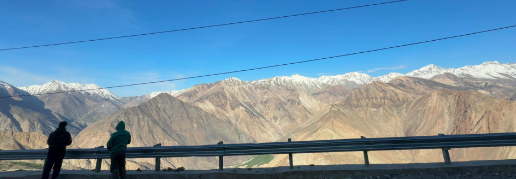
Medical Adventures in the Hills
Reflections from the Kaza camp organised by Lady Willingdon hospital, Manali
We set out at 4 AM from Manali for Spiti valley with 15 out of 15 group members sleep deprived. Little did we know the driver too had only slept 2 hours before we embarked on this long journey and would end up microsleeping almost launching us off the side of the mountainside, just to press the brake just in time. We all breathed a sigh of relief, thanked our lucky stars, and continued the journey.
A routine day in the life of Lahaul and Spiti residents.
The usual route from Manali to Kaza is a 9 hour journey via Kunzum pass which has been closed due to snow and hasn’t reopened yet despite it being the summer month of May. But Dr Bishan said we’ll take the longer route of 16 hours in one day instead of two. So we did. More on Dr Bishan later.
We reached late Sunday night and all fell asleep almost immediately. It had taken 16 and a half hours to reach. Dhananjay, the med student from New Zealand, joked he could’ve reached back to New Zealand in that amount of time.
We were staying in cute little rooms above the Community health centre of Lady willingdon hospital built by Dr Laji about 40 years ago.
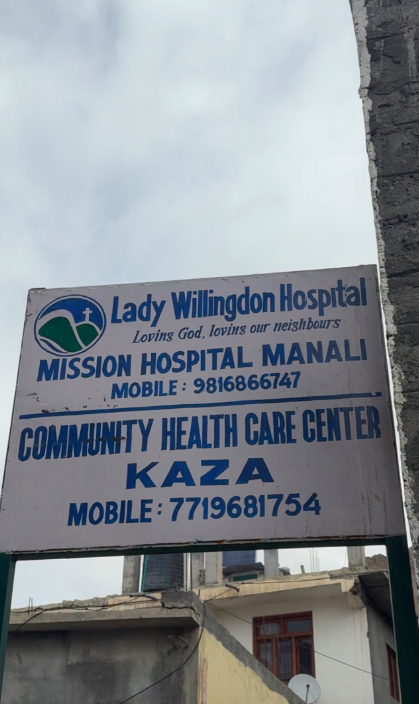
Community Health Center, Kaza
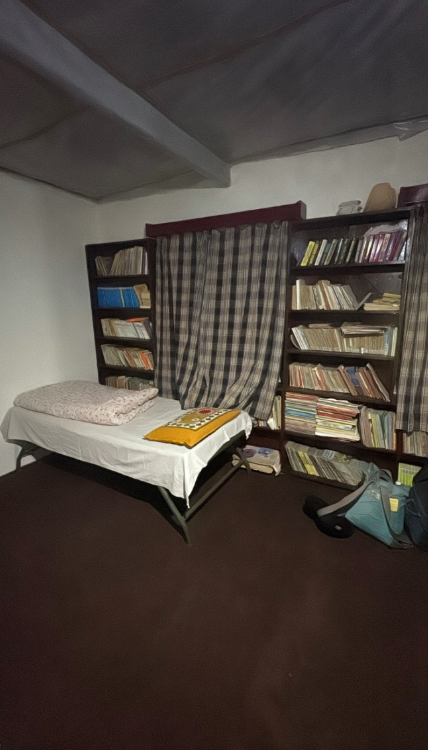
My room in CHC, Kaza
Context on Dr Laji George – he is an MBBS doctor who worked in Lady Willingdon hospital and realised the need in the valley for surgeries is more than his need for postgraduation. He used to operate at a time when your skills mattered more than your degree. I’m hearing that he is a gifted surgeon who operated very fast and had great outcomes. I’m hearing stories about how he’s done an open cardiac massage in the emergency room for someone who arrested due to electric shock and the patient lived to tell the tale and died recently of old age. I’m hearing stories of how he set up multiple different health centres in far off remote places of Lahaul and Spiti (including this centre) and conducted full surgical camps and ran clinics while also running the fully functioning LWH in Manali. I noticed that the architecture of all the centres are very similar. I asked, “was the architect of all these centres the same?” “Yes, the same”, was the reply. “Dr Laji himself.”
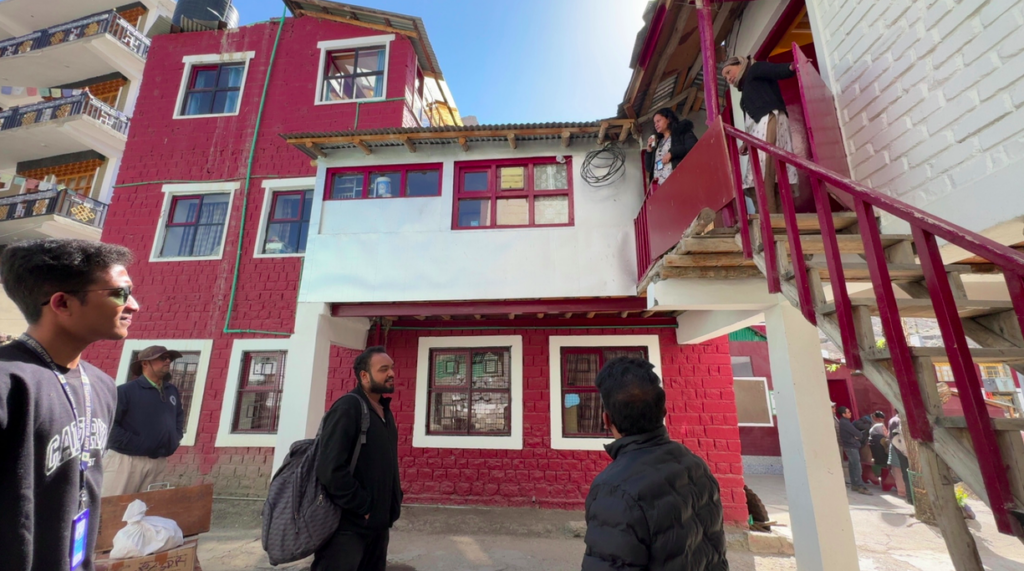
The Community Health Centre designed by Dr Laji
Do read an article on his amazing life. I hope I get to meet him sometime.
http://drericwilliams.blogspot.com/2017/05/the-story-of-dr-george-varghese.html
Day 1 of camp – a Lama guest house in Lossar valley
We drove about an hour and a half away from the centre to reach a guest house of the Lamas in Lossar Valley where we to set up camp the first day. The roads we travelled on were long and windy with no life in sight for many kilometres. I wondered whether any patients would come to see us and how. Almost miraculously immediately after we reached, the garden filled up with locals waiting to see the visiting doctors.
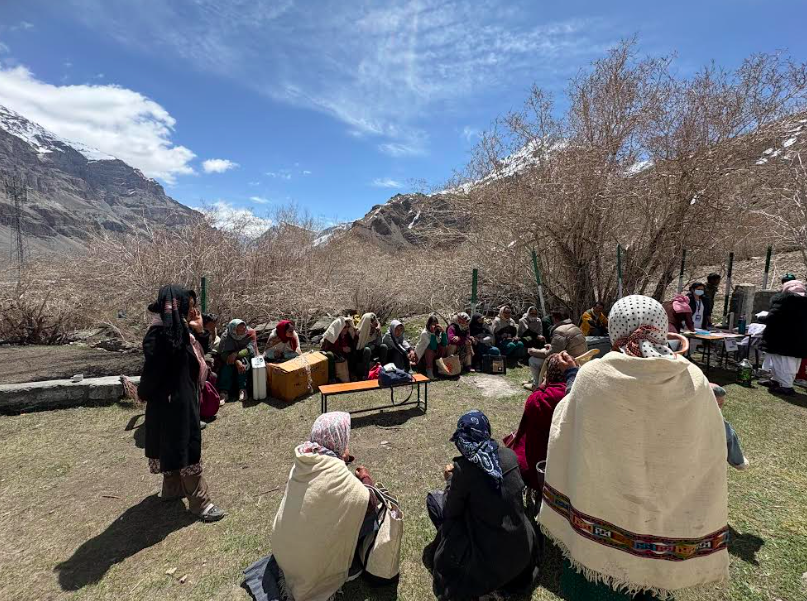
Locals of Lossar Valley lined up to see us
Our team consisted of:
- Me (general surgeon)
- Dr Aljo (orthopedician)
- Mr Aditya (physiotherapist)
- Meena and Dipika (nursing staff)
- Varghese (optometrist)
- Mercy didi (lab)
- Aaron (pharmacist)
- Dimple (community nurse)
- Dhananjay (Med student from New Zealand)
- Ramesh ji (chef)
- Amit ji, Tej Ram ji and Madan ji (drivers)
- And Dr Bishan (legend)
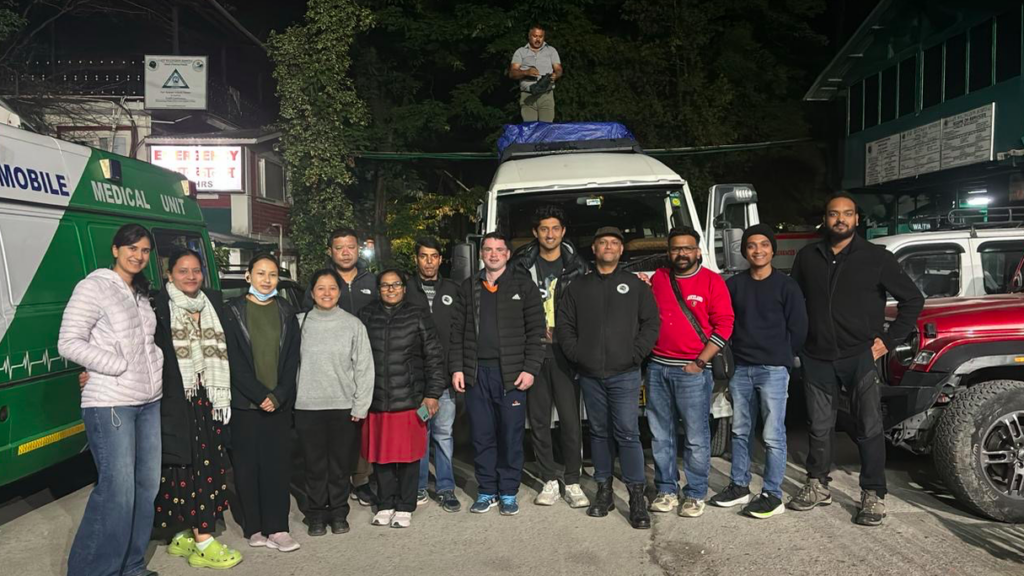
The team!
I was pleasantly surprised to find the women of Lossar quite knowledgeable.
The pregnant women had had all of their basic blood tests done and knew about taking folic acid and iron tablets. Their questions showed a high level of introspection and curiosity – “we were discussing that if one of us has had 2 cesarean sections, is it impossible for us to have a normal delivery next?”
“I have hepatitis B. What can I do to make sure my baby doesn’t get it?”
Two women required removal of their copper T which I did, after that they asked me, “now shall we use Mala D?” (an oral contraceptive) without me having to explain anything.
I was glad that I had worked after MBBS for a year and had been on many field visits so I knew how to do a basic checkup of pregnant women and answer their questions. Ideally, double and triple marker tests are supposed to be done at certain weeks of gestation but it felt inappropriate to mention it to them when the nearest ultrasound services were almost 100 km away.
They all wanted to have their ultrasound done by Dr Bishan, who is also a trained sonologist. That’s when I realized the irony of us advising pregnant women to not travel long distances, but also impressing upon to them the need for regular checkups and ultrasounds (which would involve an almost two day journey on bumpy roads).
Dr Bishan’s ultrasound services are so famous that one son convinced me that his mother needed an ultrasound of her abdomen because she gets breathless at night. I tried to explain in medical terms that the breathlessness is most likely due to her pulmonary TB for which she takes medications, but he was insistent. I gave in and let them get the ultrasound done; sometimes it’s better to reassure them with a normal report than argue that it’s unnecessary.
Hepatitis B is quite common in the valley and lots of awareness work has been done regarding it. I saw the impact of those awareness programs. Many asymptomatic people came to our camp just to get tested for Hepatitis B.
On the other hand, I saw firsthand the effect of the difficult terrain and road closure on health here. An elderly man came to me saying he’d lost his voice 3 months ago and he was feeling fatigued and losing weight. I immediately considered a differential diagnosis of carcinoma larynx and tried to explain that he needs to come to Manali for further workup for the same. He smiled and said “But the road to Manali is shut now. I’ll come after the road opens.” There was no chance I was going to convince him to come to Manali via the 500 km route that we had taken to get there. So I made him promise that he’d come as soon as the Kunzum pass opens, and before the end of this month.
At the end of the day, the lama of the guesthouse invited us to the inner room with a warm tandoor. He offered us chai (our fifth cup of the day). He thanked Dr Bishan, “it had been a while since we got a checkup. And the closed roads made it too difficult for us to travel. Thank you for organizing this camp.”
Everything is worth it.
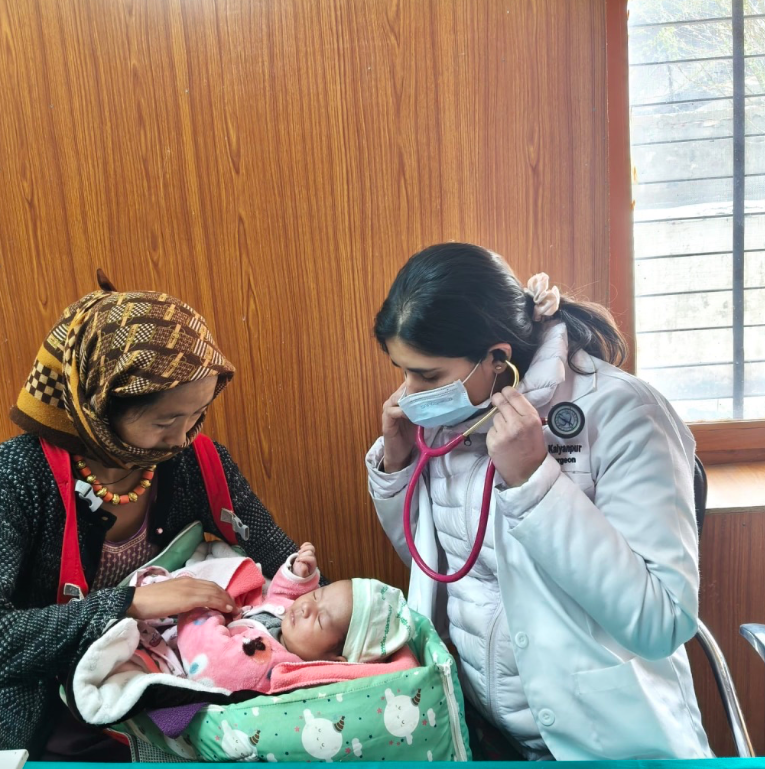
Me examining a baby
Day 2 of camp – a Civil hospital in Kaza
I have met a few people in my life who I can call “legends”. Dr Bishan Shashni is one of them. Dr Bishan is from Lahaul and did his MBBS from IGMC Shimla and then worked for 20 years as a Block Medical Officer in Civil Hospital Kaza. He told us incredible story of his younger days when he travelled on horseback, how he travelled through thick snow for days on end to get to a village with a sick patient, how he arranged helicopters to airlift sick patients during the winter when roads were blocked. He told us that working and living in difficult conditions, makes all other issues seem small and surmountable. That’s his approach to life. “Thank god for our lucky stars, we are blessed to see another day. There’s no reason to complain.”
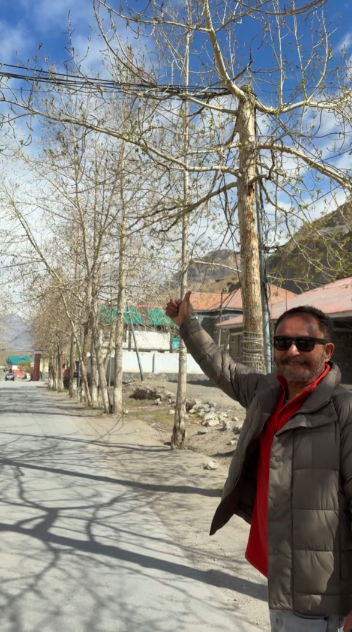
The talented and optimistic Dr Bishan
After retirement is when he joined Lady Willingdon hospital to run the community program. At the ripe young age of 65, he realized there is a major need for ultrasound services in his area, so he spent a whole year in Delhi to get trained in sonography. Now he takes his portable USG machine around during health camps in different villages.
He is so well known in Lahaul and Spiti, that as we were walking to the Civil Hospital of Kaza, people on the side of the road kept stopping to greet him and invite him home for chai. He waved at them and told them about the camp we’re having today.
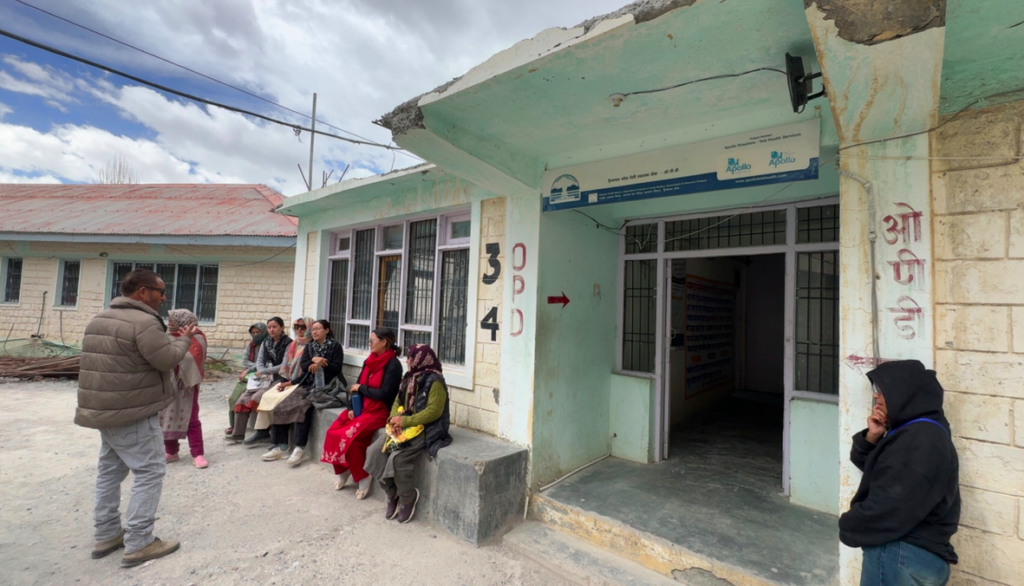
Dr Bishan addressing the people of Kaza
We set up camp in the OPD of the Civil hospital of Kaza. The infrastructure of the CH was very good, with a dedicated endoscopy room and two fancy endoscopes. Unfortunately, the place doesn’t have running water. Signs regarding the “Steps of Handwashing” were displayed everywhere, but there was no soap to be seen anywhere. Waste segregation according to protocol was also non-existent. We planned to do endoscopies on the fifth day of the camp and told the patients to come empty stomach on that day.
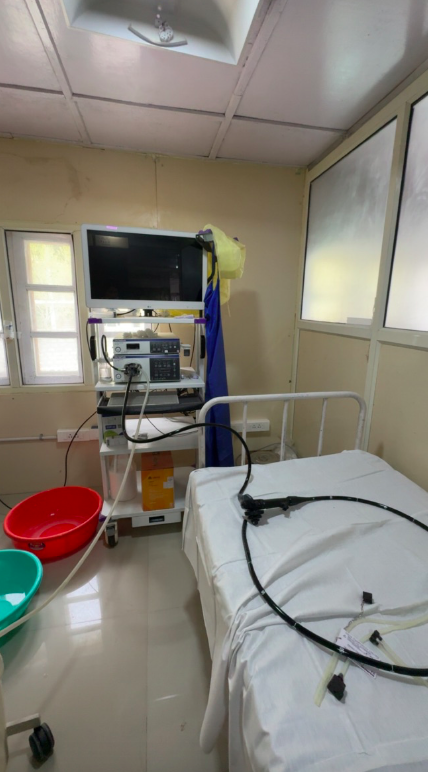
Fancy endoscope in CH, Kaza
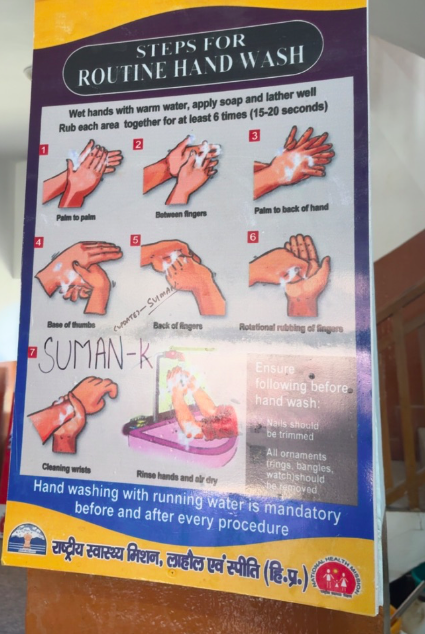
Signs of hand-washing steps but no soap available
Roads in the areas have definitely improved from the way they used to be in the past. Border Roads Organisation takes credit for this. BRO functions mainly thanks to migrant workers from other states. These migrant workers came to see us in the camp. Many of them had altitude sickness and it was so sad to see, considering advising descent wasn’t even an option. We treated some of them for gastroenteritis and they were grateful to get some care being so far away from their homes and families.
At one point there were too many general cases and ortho cases were less so I told Dr Aljo to look for murmurs in all the schoolchildren (because my mom is a pediatric cardiologist). This is the look he gave me:
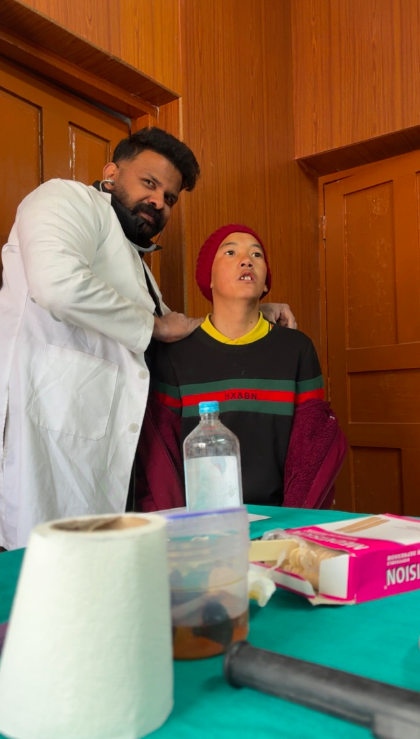
Spotted: An orthopedician using a stethoscope
That night the water pipe of our guestrooms broke, and water leaked from the roof. I saw the ultimate jugaad where the team members used rubber of an old tire to provide a temporary fix to the leaking pipe so we could manage till the next morning. The plumber took 24 hours to reach us and then replaced the pipe in about 10 minutes.
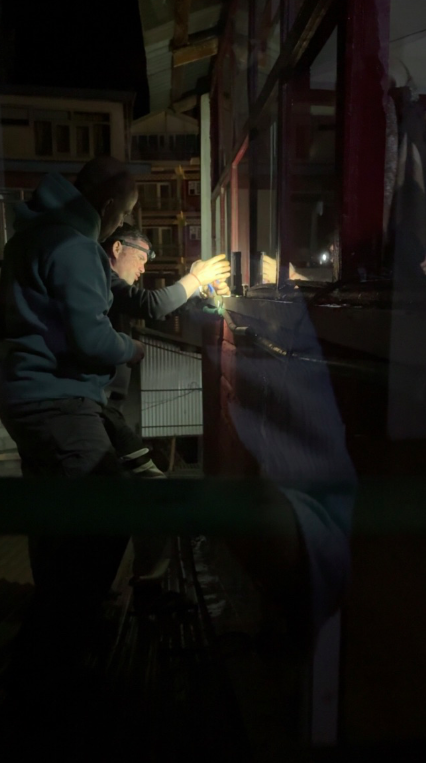
Pipe jugaad in the middle of the night
Day 3 of camp – a PHC in Pin Valley
We reached Pin Valley to locals smiling with their warm, local greeting “Julley!” An energetic medical doctor who was from that village itself ran the PHC in Sagnam. It was heartening to see the efforts he had put to improve the PHC there. When I asked him if he had plans to pursue PG, he laughed and said “First there’s so much to improve here! I recently got us electricity here, next I am trying to get running water. After that we will get quality assurance approval.”
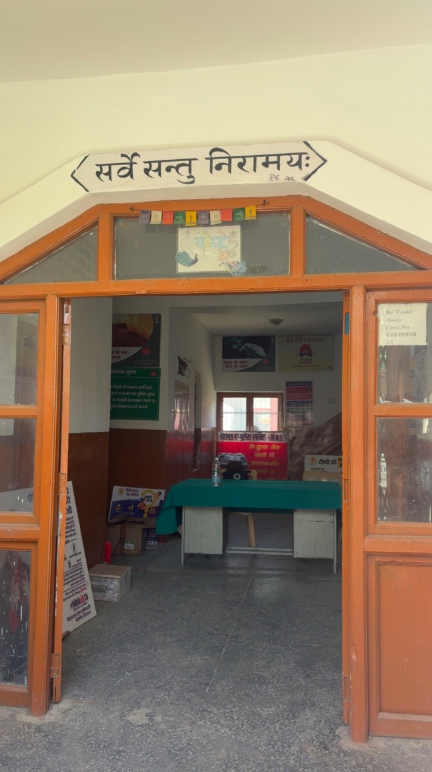
A nice PHC in Sagnam
It was a testament to his enthusiasm that the people of Pin Valley had admirable health-seeking behavior. When women found out we were doing pap smear screening as well, they lined up to get their screening done too. Many of them had already had their “full body check-up” in Shimla a year ago and wanted some tests to be repeated now. “Please see us”, they told me, “and let us know if we need to be referred down to Shimla.”
An toothless 70 year old lady smiled when we asked her if she has any comorbidities.
“Yes, I have BP.”
“And I am taking amilo-dipine for it.”
Typing this doesn’t do justice to the cute way she said this.
The PHC was doing a good job of managing the diabetes and hypertension of the village. All of them except one had controlled sugars and BPs.
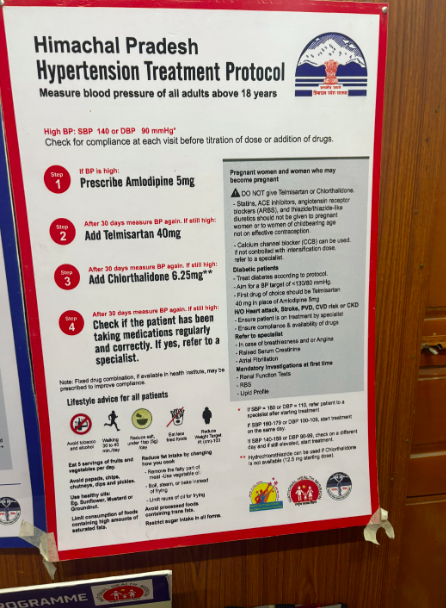
Himachal Pradesh Government treating protocols
At one point many of the schoolchildren from the nearby school came to get checked up. All of them said they get stomachaches on and off. We gave them all deworming medication and we gave one of the older ones a bottle of digene for gastritis. Next thing we saw were all of them sitting outside the clinic tasting a spoonful of it each.
The camp became almost like a village function. Dr Aljo would suggest an ozone injection for their knee osteoarthritis. Women sitting in front of us started discussing among each other whether or not to get it. After a five minute long intense discussion in their local language one turned to him and said ok. Give the injection. So he did.
We were seeing over a 100 patients a day, from kids with stomach aches, pregnant women, older men with COPD, older women with osteoarthritis and the occasional surgical patient, including one who had undergone laparoscopic deroofing of a hydatid cyst in PGIMER three years ago and was on regular follow up.
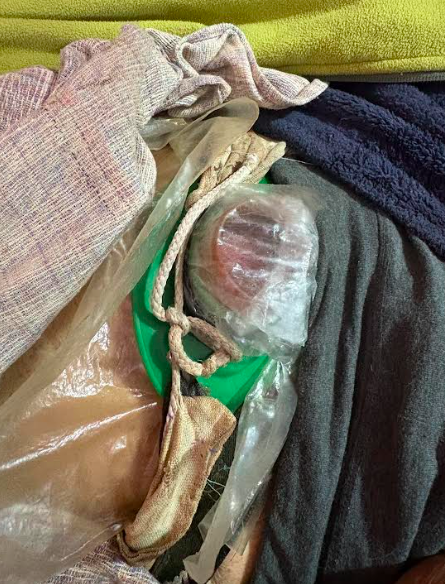
Stoma bag jugaad by one of the patients
The long day ended with us going to the most picturesque monastery called Dhankar, which is shaped like a ‘lotus’, at the top of a hill. It’s surrounded by eight mountains and is built so high up so as to protect itself from attacks by bandits. Me and the med student kept pinching ourselves wondering whether we were really there.
The feeling of disbelief of how our days were going was overwhelming.
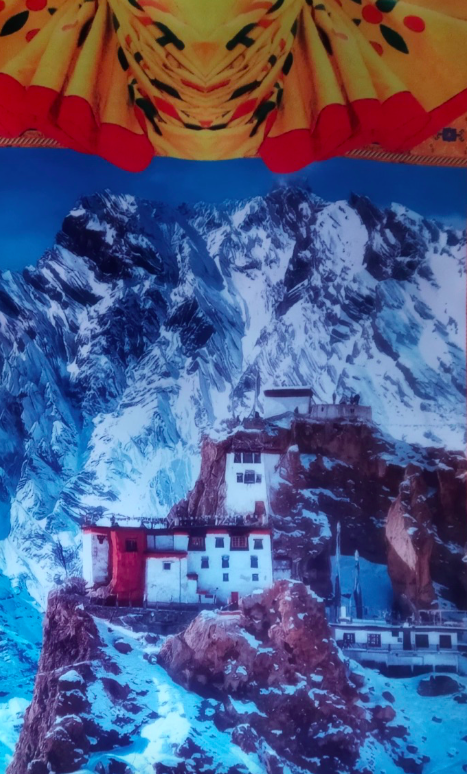
A painting of Dhankar monastery
Day 4 of camp – a PHC in Tabo
Another 100 patients came to see us that day. One of them told us about how the doctor on duty there had ruptured her ganglion cyst using a bible, which is something I’ve read about only in books. Some of them complained of worms in their tummy, which is expected considering the lack of running water in the area.
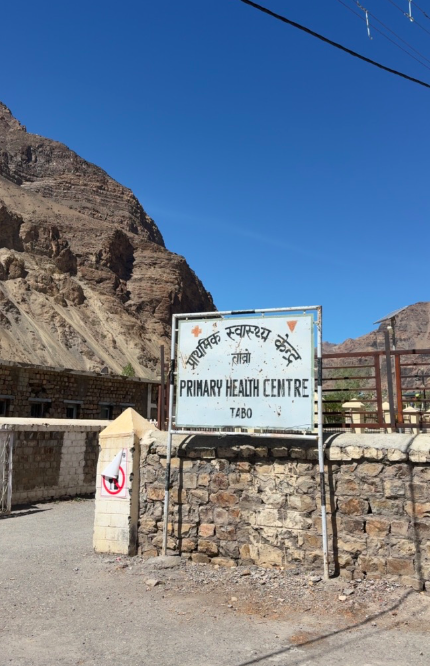
PHC, Tabo
Sadly, I ended up having a fight with the staff there regarding a patient they had admitted there on oxygen with high altitude pulmonary edema. I felt that they weren’t managing him well and they should refer him immediately, they felt that they were doing their best under the circumstances and they would refer him eventually if he didn’t improve. Long story short, they called the ambulance to send him down, after a heated conversation. On our way back on the narrow road, with shooting stones falling from the side of the road, we saw an ambulance speeding in our direction towards the PHC.
One of our tyres burst on that rocky road, and Madan bhai skillfully changed the tyre then and there and we continued our journey back.
All’s well that end’s well but I definitely saw lots of scope for improvement in the PHCs there, something I’d like to work on in the future.
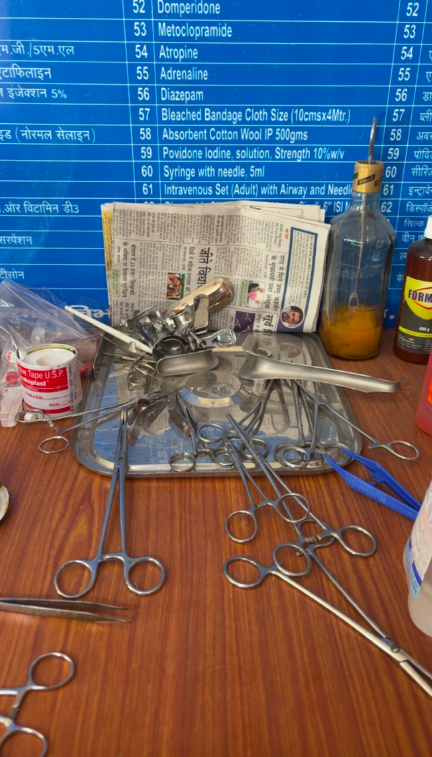
Scope for improvement in the PHCs
Day 5 of camp – endoscopy day
We had called around 10 patients for endoscopy and 2 who required minor excisions to CH, Kaza on Friday. Only two patients showed up (it’s farming season till November). We asked them whether they had come empty stomach and then began. During my second endoscopy, I saw something that looked like a large red bleeding ulcer in the stomach, which was adherent to food particles. I tried suctioning and clearing it up so I could biopsy it but was unable to. Later on after removing the scope and probing, the patient admitted he had eaten some watermelon in the morning, but he was too timid to tell us. A bit of a failed day.
Anyways, the main camp at the centre was popular and crowded so it was an eventful day.
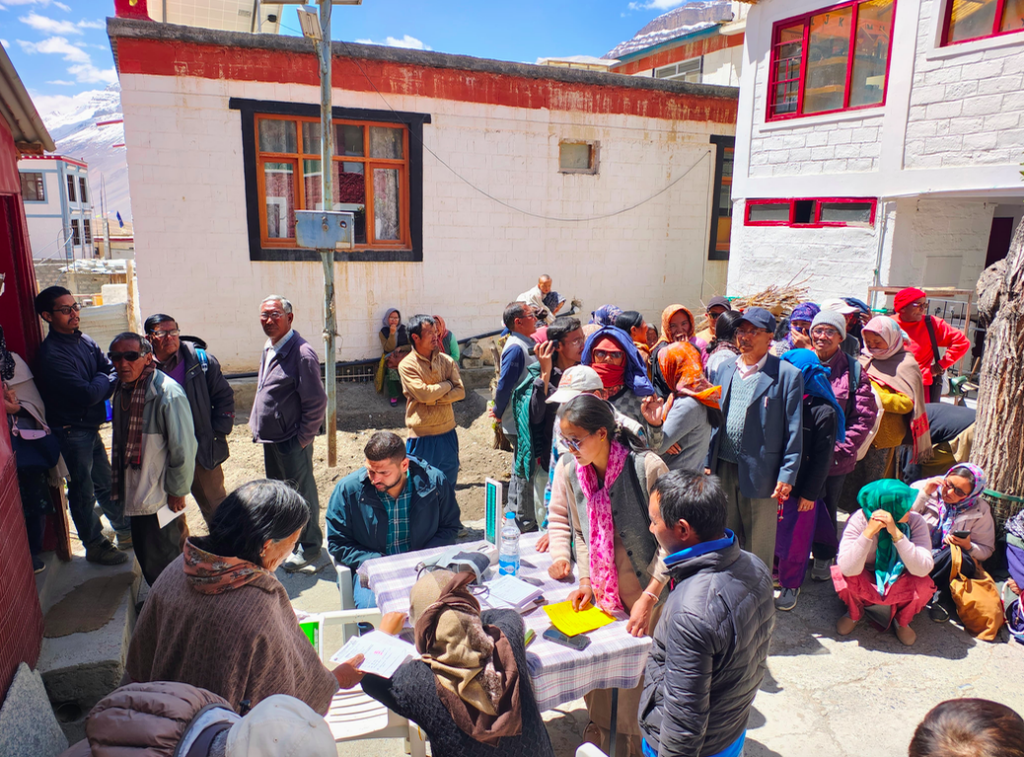
People waiting to be seen by the Mission hospital team
Day 6 – The 500 km journey back
Dr Bishan had tried getting us special permission to go back via the Kunzum pass, and had almost succeeded. But then some of our team got cold feet about risking our lives on such a dangerous road, which wasn’t even opened up for travel. So he made the executive decision that we would back on the same long route we took to get there.
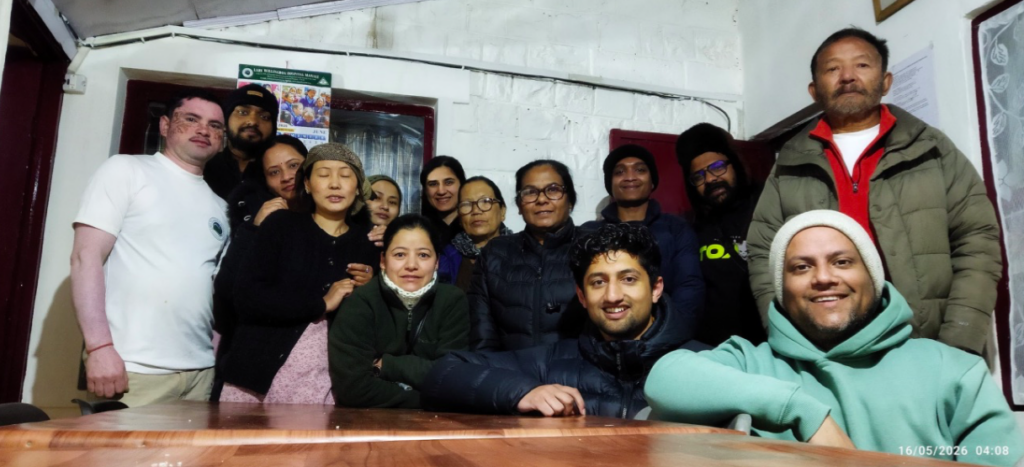
Pic of the team on the last day at 4 AM
We left at 4 AM. The drive from Kaza to Manali is something everyone should experience once in his or her lifetime. The curves were just as thrilling as the views. I was initially terrified, but with time, got used to it and eventually enjoyed the adventure.
Now as I write this sitting in a rainstorm waiting for the roadblock to open up so we can finally reach back to Manali, I decide to spend some time reflecting on my learnings from the week.
One is that these long journeys can make even healthy people sick. I can’t imagine sick people making this trip to reach a higher centre for investigations and treatment. This must be kept in mind while making guidelines for patients in far-off places. Also, as doctors, it’s important to be mindful before scolding patients for coming late for treatment. You never know the kind of arduous journeys they might have been through to come to your hospital’s doorstep.
Second is that people might say what’s the point of a general surgery training if you’re going to sit in a community clinic and treat COPDs and Hypertension. I have two responses to this – one, it always helps to have general surgery training especially when few cases come that a MBBS doctor wouldn’t be equipped to handle in a camp. And at the end of the day, if the major health problem in the community is COPD and Hypertension, then shouldn’t we as doctors be working on that?
The state of healthcare in many rural and remote areas has definitely improved from how it was many years ago. But there’s still a long way to go. I’m looking forward to being part of that change.
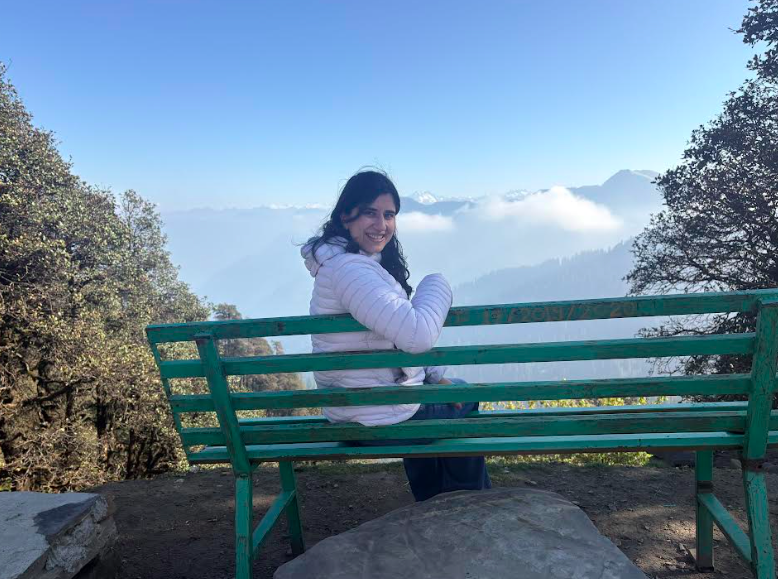
Alisha Kalyanpur
General Surgeon at Lady Willingdon Hospital, Manali
and co-founder of Rural Hospital Network