

Where medicine began to feel human…
What Jan Swasthya Sahyog taught me about healthcare, dignity, and being a doctor
During my three-day rural sensitization visit to (JSS), Ganiyari, I realised something that no textbook, lecture hall, or examination had truly taught me – healthcare cannot be understood completely from within the walls of a medical college. To understand illness, one has to understand the life surrounding it.
Before visiting JSS, my understanding of medicine was largely disease-oriented. Like most medical students, I had learned how to diagnose illnesses, interpret symptoms, and prescribe treatment. We discussed doctor-patient relationships during AETCOM (Attitude, Ethics and Communication) sessions and wrote long answers about empathy in examinations. But somewhere between textbooks and practical postings, healthcare had started appearing to me mainly as a system centred around diseases.
One of the reasons I wanted to attend the rural sensitization program was because I wished to understand the actual problems of rural healthcare in India. I had often heard about JSS and its deep connection with nearby tribal villages, and I wanted to see for myself why people placed so much trust in this institution.
The first thing that struck me after reaching the campus was its simplicity. The hospital did not resemble the polished image that usually comes to mind when one imagines a modern healthcare centre. The buildings were mostly single-floored with terracotta roofs, blending naturally with the rural surroundings rather than standing apart from them. Traditional paintings decorated the walls, reflecting local culture and identity. Instead of appearing intimidating, the environment felt familiar and welcoming, almost like an extension of the villages from which the patients came.
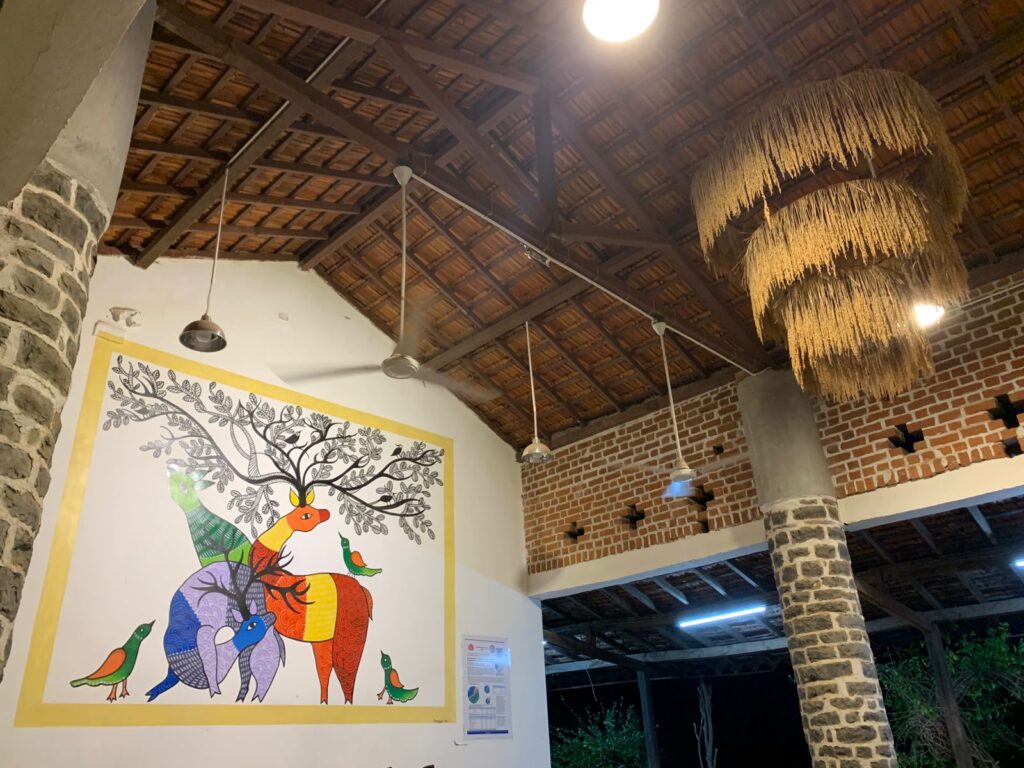
Description- Traditional tribal wall art to create a welcoming environment for tribal communities.
Yet despite this simplicity, the campus was full of life.
There were patients everywhere – men, women, children, elderly people – many of them coming from distant tribal and forest regions. Some had traditional tattoos marking their cultural identity. Some had travelled for hours with family members carrying small bags filled with clothes, rice, utensils, and even firewood because their treatment or OPD waiting time could extend for days depending on patient load. JSS had dharamshalas where these families stayed while waiting for consultations and follow-ups.
What remained common among all of them, however, was hope.
The campus itself felt less like a hospital and more like a living rural community. I was told that nearly a thousand people moved through the institution daily when one included follow-up patients, new registrations, relatives, healthcare workers, and staff. Informative posters lined the walls while awareness audio messages regarding diseases and health practices continuously played in the background.
Even before entering the OPD, one could feel that healthcare here extended beyond prescriptions and investigations. And slowly, as I began observing the institution more closely, I realised that JSS was not simply treating diseases – it was trying to understand the lives from which those diseases emerged.
As I spent more time observing the functioning of the hospital, I began noticing something remarkable – every small system within the hospital seemed to be designed while keeping the patient’s struggles in mind.
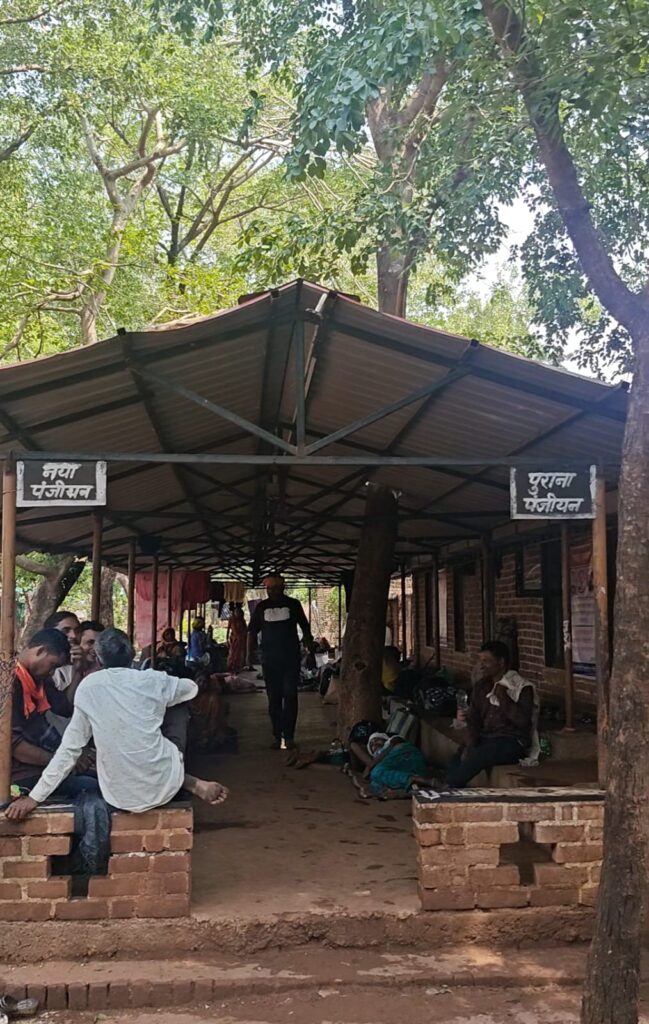
Description – Separate Queue for New registration and follow up cases for the inconvenience of both hospital and patients
Patients were divided into separate lines for follow-up visits and new cases so that those arriving for the first time could begin counselling immediately from the registration desk itself. Basic measurements such as height and weight were taken early, and different coloured cards were issued based on categories including gender and diseases such as HIV, cancer, and non-communicable diseases.
At first glance these may appear like simple organisational measures, but while observing the patient flow, I understood how these systems reduced confusion and improved efficiency in a hospital handling enormous patient loads every day.
What impressed me most was the attitude of the healthcare workers themselves. Conversations at the registration desk were not limited to paperwork. The staff constantly discussed how procedures could be made easier for patients who had often travelled from remote villages with limited resources, little health literacy, and immense uncertainty.
One conversation that stayed with me was about how family members of a patient had travelled from a remote village. Despite their difficult circumstances, they had immense faith in JSS. They spoke with genuine hope that their family member would recover there. Listening to them made me realise that trust in healthcare is not built only through medicines or infrastructure. It is built when people feel seen, understood, and cared for.
At the same time, despite its rural simplicity, the hospital also maintained organised medical systems including OPDs, laboratories, emergency services, and a critical care unit. The institution never appeared to separate compassion from competence.
The more I observed, the more I realised that JSS was not functioning merely as a healthcare centre. It was functioning like a system carefully built around the realities of the people it served. Perhaps the most important lesson I learned during my visit to was the difference between treating a disease and understanding the reasons behind it.
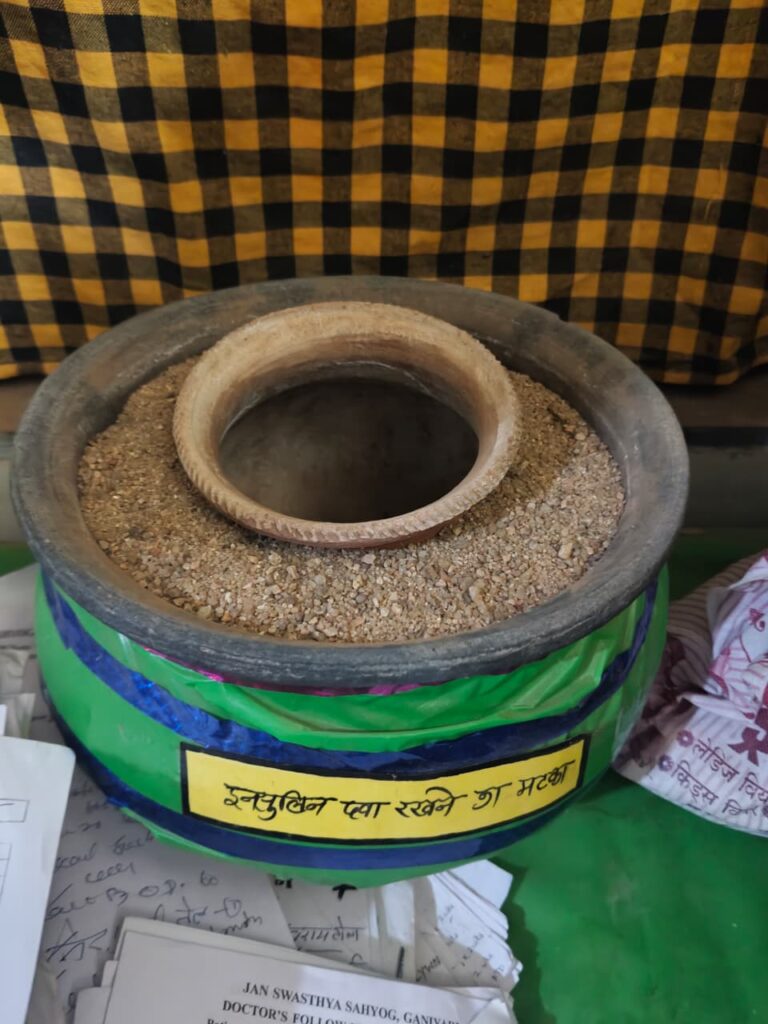
Description- Used to Store insulin even when the temperature outside is 40 degrees it can keep the injection to 17 degrees
Throughout medical college, most of my learning had revolved around identifying symptoms, reaching diagnoses, and prescribing treatment. The focus was often centred on the disease itself. But at JSS, I observed something much broader – an attempt not only to cure illnesses, but also to reduce the social conditions that contributed to them in the first place.
For the first time, concepts like social determinants of health, which often appear theoretical in textbooks, became visible in real life. I saw how poverty, malnutrition, illiteracy, distance from healthcare centres, poor transportation, lack of awareness, and unstable livelihoods directly influenced the health of entire communities. Many patients delayed seeking treatment because visiting a hospital meant losing daily wages or leaving their families behind. Others struggled with treatment adherence simply because healthcare systems are often not designed for people with limited literacy or resources.
JSS appeared to be deeply aware of these realities. One example that impressed me greatly was the institution’s emphasis on nutrition alongside medication. Malnourished tuberculosis patients received calorie-dense nutritional support prepared by the institution itself. It reflected a very different understanding of healthcare -recovery does not happen through medicines alone when the body itself lacks nourishment.
Another thoughtful innovation was the medication bags designed for patients with limited literacy. The bags contained separate compartments and simple indicators representing morning, afternoon, and evening doses, helping patients follow treatment schedules more easily. Though it was a small intervention, it reflected an extraordinary level of empathy and practical thinking.
Even simple preventive measures carried remarkable thoughtfulness. After eye examinations, spectacles were provided at extremely affordable prices so that poor vision would not become another barrier in daily life. Rubber chappals were distributed to diabetic and leprosy patients to prevent foot injuries and complications that could otherwise become severe.
What impressed me was that these were not expensive or technologically advanced interventions. I realised that simple interventions could address real-life everyday problems.
The institution also integrated Ayurvedic medicine through its own manufacturing unit, combining different approaches wherever they could benefit patients holistically. Rather than rigidly limiting itself to one model of treatment, the focus appeared to remain on what would genuinely help the community.
Slowly, I began understanding that healthcare at JSS was not organised around diseases alone. It was organised around people – their limitations, their realities, and the difficulties they carried long before entering the hospital.
As the visit continued, I realised that viewed healthcare as something extending far beyond hospital wards and OPDs.
One initiative that particularly stayed with me was “Phulwaris,” community-based centres for children between six months and three years of age where children were encouraged to learn through play-based methods. At first, it seemed unrelated to medicine. But gradually I understood the deeper idea behind it. In communities affected by malnutrition, poverty, and limited educational access, early childhood development itself becomes a part of healthcare.
Alongside this, there were plans for developing “Badi,” local vegetable cultivation spaces aimed at improving nutrition and sustainability within communities. Slowly, the boundaries between medicine, nutrition, education, and livelihood began disappearing in front of me.
I also learned about the “GARIMA” initiative, through which products prepared by self-help groups and local communities were supported and promoted. The more I observed, the more I realised that JSS was not functioning merely as a hospital. It was functioning as a response to rural life itself.
Even innovation at JSS appeared deeply connected to practical community needs. Through its “AppTech” division, low-cost and resource-appropriate healthcare tools were developed specifically for rural settings rather than depending entirely on expensive urban solutions.
What struck me repeatedly during those three days was how carefully dignity had been integrated into healthcare delivery. Nothing felt unnecessarily complicated or inaccessible. Every system seemed to ask the same question: How can healthcare become easier for the patient?
Perhaps the statement that stayed with me the most during the entire visit was something taught to healthcare providers during training – that a patient should ideally not spend more than two hundred to two hundred and fifty rupees monthly on healthcare.
That single principle completely changed the way I thought about medicine.
In medical education, discussions about treatment often revolve around ideal investigations, protocols, and management plans. Rarely do we stop to think about what healthcare actually costs for a family surviving on limited daily income. At JSS, affordability itself was treated as a part of ethical medical care.
For the first time, I understood that accessibility is not an additional feature in healthcare. It is one of its most important responsibilities.
By the end of those three days at JSS, my understanding of what makes a “good doctor” had changed completely. Most of my understanding of an ideal doctor came from textbooks. I understood doctor-patient relationships mainly from an examination point of view – empathy, communication, professionalism, ethics. They were important concepts, but somewhere they still felt theoretical. At JSS, I saw those ideas being practiced in real life.
I realised that there is a significant difference between being a doctor and being a good doctor.
A doctor diagnoses disease and prescribes treatment. But a good doctor continuously thinks about the overall well-being of the patient — their financial condition, nutrition, accessibility to healthcare, understanding of illness, family responsibilities, social background, and ability to continue treatment after leaving the hospital.
A good doctor does not stop caring once the prescription is written.
This philosophy seemed deeply embedded within the institution itself. Every small detail – from counselling beginning at the registration desk to affordable spectacles, from nutrition support for tuberculosis patients to footwear for diabetic and leprosy patients – reflected an attempt to reduce suffering in practical ways.
Even the environment of the hospital reflected this thinking. The terracotta-roofed buildings, traditional paintings, open surroundings, and familiar atmosphere reduced the fear and emotional distance that patients often experience in hospitals. The institution did not appear disconnected from the communities it served. Instead, it appeared rooted within them.
I was also deeply inspired by people who worked there, whose dedication towards underserved communities reflected the kind of socially accountable medicine that is rarely discussed enough during medical training. Somewhere within those crowded corridors, among patients carrying hope from distant villages, medicine began to feel human again.
The visit made me realise that healthcare is not only about curing illness. It is also about preserving dignity, reducing suffering, understanding social realities, and ensuring that treatment truly reaches the people who need it most.
Long after leaving JSS, one thought which continues to stay with me is – “Medicine becomes meaningful not when it only treats disease, but when it genuinely understands the lives of the people affected by it“.
After returning from there, I kept thinking about how differently medicine appears inside a classroom compared to how it exists in people’s lives.
In medical college, we spend years learning anatomy, pathology, pharmacology, investigations, and treatment protocols. We are trained to recognise diseases quickly and manage them systematically. These skills are essential. But somewhere within this process, it becomes easy to forget that patients do not experience illness as isolated clinical conditions.
For many people, illness arrives together with financial stress, fear, loss of wages, travel difficulties, poor nutrition, and uncertainty about the future. At JSS, I saw healthcare providers thinking about all of these realities simultaneously.
I saw systems designed not for convenience of the institution alone, but for the comfort of patients. I saw affordability being treated as an ethical responsibility rather than an optional service. I saw healthcare workers attempting to reduce confusion, improve accessibility, simplify treatment adherence, and preserve dignity even in small ways.
Most importantly, I saw that compassion in medicine is not limited to speaking kindly to patients. Compassion can also exist within systems – in how hospitals are designed, how treatment is made affordable, how counselling begins early, how nutrition is prioritised, and how communities are included in healthcare itself.
Perhaps that is why JSS remains deeply trusted among surrounding villages despite its simple infrastructure. People do not travel there only for medicines. They travel there because they feel cared for.
As a medical student, this visit changed my understanding of healthcare permanently.
It taught me that medicine becomes truly meaningful when doctors begin asking questions beyond diagnosis: Can the patient afford this treatment? Will they understand how to take these medicines? What social conditions are contributing to this illness? What difficulties will they face after leaving the hospital?
Those questions may not always appear in examination papers, but they define the difference between treating disease and caring for people.
Even now, when I think back, the images that return first are not machines or hospital wards – it is the terracotta roofs, traditional paintings, crowded OPDs, awareness messages echoing through corridors, families carrying rice and firewood from distant villages, and patients waiting with extraordinary patience and hope.
And somewhere within those memories, I feel that I witnessed medicine in one of its most humane forms.
Acknowledgement
I would like to sincerely thank Dr. Sumit Dhruve Ma’am (Head of department, Community medicine, GMC Korba, Chhattisgarh) for encouraging us to participate in the Rural Sensitization Program and helping us experience the human side of healthcare beyond classrooms and textbooks.
These reflections are shared by Devanshu Gupta, a 2nd year MBBS Student from Government Medical College, Korba, Chhattisgarh