

Learning from the Hills: Post-RSP reflections from Kodaikanal’26
Van Allen Hospital & Sirumalai Health Centre, Kodaikanal, Tamil Nadu
October 23–25, 2026
The Rural Sensitisation Programme (RSP) conducted at the Central Guest House, Kodaikanal International School, Kodaikanal by Van Allen Hospital and Sirumalai Health Centre in Tamil Nadu from October 23-25, 2026, brought together a diverse cohort of 24 participants from the medical background as well as 2 non-medical participants with an interest in rural healthcare. The programme sought to deepen participants’ understanding of what it entails to reside in remote areas over three immersive days by discussing how lived rural realities intersect with healthcare.
Key Resource Persons: Sister Leema St. Thomas Dispensary; Dr Vijay Isaac & Dr Vijila, Co-founders of Prem Jyoti Community Hospital, Jharkhand; Dr Ponrathi and Dr Peer Mohammad from General Hospital, Kodaikanal; Dr R Rajamanickam, Environmentalist and Volunteers from Indian Nirman Sangam
Day 1: Introduction & Building Context
October 23rd
The cool climate and heavy rains provided the perfect backdrop to the start of the 3-day immersion programme that made the participants realise the challenges of living in remote locations like Kodaikanal – no electricity, landslides, motion sickness etc.
The programme in the evening with an interactive icebreaker in which, in groups of three, they introduced each other after learning about their backgrounds, motivations, and aspirations. Each group was tasked with identifying a shared interest, which led to discussions on themes such as rural healthcare, compassion, sports and travel.
Photo taken during the RSP at Kodaikanal’26
The next session was on RSP and its objectives. A K Dhivyaprabha shared her experiences in the RSP at IDO, Gattumalla in March 2026 while Arunima presented a brief overview of the RSP and the objectives of conducting an RSP so that participants can explore things beyond the conventional medicine.
After the initial ice-breaker, Dr. Danigasalam from Van Allen Hospital shared his journey. From working in corporate hospitals to now settling in Kodaikanal with family. He shared the important role of community-led hospitals in remote locations that are helpful in providing primary care. The session took a long time with curious heads having many questions related to the communities and their access to healthcare in addition to the doctors’ own journey.
This was followed by an interactive session with Dr. Vivek Karthikeyan from Sirumalai Health Centre who discussed the journey of Sirumalai Health Centre and how proper village-level primary care can cure up to 90 percent of the cases. Only 10 per cent of them need to be referred further. But unfortunately, remote areas face many challenges in terms of infrastructure, workforce etc. It was astonishing to see the conversations continue over dinner as well. Dr Senthil from Van Allen Hospital then provided a brief overview of the Kodaikanal hills and the surrounding villages. Issues that were related to the tribal communities were discussed at large – conversion to christianity is resulting in them not getting an ST certificate, issue of migration, poor roads leading to fatal medical cases etc. and their impact on the status of healthcare came up many times.
These discussions stretched well past the scheduled time as many students gathered to interact and discuss in-depth. After a fruitful first day, all of them were geared up to start early the next day to the field.
Day 2: Community engagement at the field site and learnings
October 24th
The second day began with much excitement despite the continuous rains. After a sumptuous breakfast, the participants set off to Sirumalai Health Centre at Perumalmalai (around 11 kms from Kodaikanal) where they were given a field orientation by Dr Vivek and Dr Sudipta as well as the community health workers who joined us in the field visit. The rains played a spoilsport to the field work component but even then two teams were then taken to two hamlets post which there were discussions on themes related to chronic illnesses, gender, education, human-wildlife conflicts etc. The whole team played a crucial role as the bridge between the community members and the participant explaining each of the cases in detail.
Photo taken during the RSP at Kodaikanal’26
For lunch we visited St. Thomas Dispensary which is a nurse-led clinic. Sister Leema was kind enough to offer us lunch as well as share her journey and how impactful a nurse-led clinic has been in the area. Case-studies were shared that proved how nurse-led care models working in tandem with nearby hospitals can provide the necessary healthcare. This was followed by an interactive session with Dr Vijila and Dr Isaac, who co-founded the Prem Jyoti Community Hospital in Jharkhand. From growing up in Tamil Nadu to working in Jharkhand, learning the local Malto language and coming up with creative ways to spread awareness among the Malto community through songs and dance. They also made the participants take up role play to enact various scenarios in the case of rural healthcare.
After that we rushed to our venue at the Guest House at Kodai International School where the students engaged in related discussions on field observations. Many important aspects about the community-led care model came up for the discussion at the forefront. We were joined by Dr Shalini, Dr Vijila and Dr Isaac who also provided their insights into the observations along with Dr Senthil, Dr Vivek and Dr Sudipta.
After the discussions, there was a musical performance by the Paliyar tribal community through traditional instruments. After the first performance to invoke their ancestors and god, almighty, the beats then changed to foot-tapping music and instantly the crowd of participants started dancing in circles.
Photo taken during the RSP at Kodaikanal’26
Day 3: Discussions, Reflections and Way Forward
The final day began with a tour of the Van Allen Hospital by Dr Suranjan who explained the history and the functioning of the hospital. After the fruitful hospital tour, there was a session on the workings of nurse-led clinic, government hospital, private hospital and community-led care model. Participants were divided into groups and asked to present on the patient journeys, how do patients encounter the system, who has power, what is the infrastructure, who is included and excluded out of this healthcare model etc. and what intervention is needed to positively change its functioning. We were joined by Dr Ponrathi and Dr Peer Mohammed from the Kodaikanal General Hospital who shared their insights into the functioning of their hospital and also shared their stories. It was a vibrant discussion with the participants engaging critically to understand the functioning of the hospitals and how they work together in remote areas which went on till lunch. Sithara Trust, the backbone behind Sirumalai Health Centre made a short video presentation about their impactful work in the livelihood and health sector.
Photo taken during the RSP at Kodaikanal’26
Post-lunch was a session with volunteers from Indian Nirman Sangam, an NGO which works for the welfare of the tribals followed up by an engaging session with Dr. R. Rajamanikam, a PhD in Ecology and Environment as well as a naturalist who is working to conserve ecological practices in the Kodai Hills. These discussions beyond healthcare intrigued the participants as well as made them realise to look at different kinds of work.
After this we had a session on takeaways of the participants after which the last segment was the way forward where Arunima presented RHN’s work and what the participants can consider going forward. This was followed by discussions on pathways for continued engagement. Participants were introduced to various opportunities, including:
- Travel Fellowship
- Social and Obstetrics Fellowship
- Medico Friend Circle
- Rural Hospital Network (RHN) opportunities
- Azim Premji Health Equity Fellowship etc.
After group photographs, the formal proceedings ended with a vote of thanks, followed by informal interactions.
Participants Impression of the Programme –
“The doctors doing the best they could with the limited resources they had was amazing to witness. Realising that the role of a doctor in a rural set up goes BEYOND only healthcare. The fact that it’s practically possible for me to pursue work in the rural set-up and there’s such a great organisation backing us up is very encouraging to know.” – Anonymous
“This programme has genuinely made me more interested in working in rural areas. Meeting doctors like Dr. Isaac and seeing how much of a difference dedicated healthcare professionals can make in a community made me realise how meaningful this work can be. What stayed with me most was the trust and respect people have for their doctors and the sense of satisfaction that comes from being able to make a real difference in someone’s life. I understand that rural practice comes with its own challenges, and I don’t want to romanticise them, but this experience has made me more willing to embrace those challenges. As a medical student, I am still learning and exploring where I can contribute best, but I would genuinely love to consider working in a rural setting in the future. This programme has made me realise that I want to become a doctor who not only treats patients but also understands the community they come from and works towards making healthcare more accessible to them.” – Anonymous
Conclusion
The RSP at Kodaikanal challenged assumptions, broadened perspectives, and instilled a deeper sense of responsibility among participants. The participants felt the need to focus beyond hospitals and urban centres, to explore and factor in more about those social determinants of health beyond the conventional medicine to reach the underserved and unheard communities.
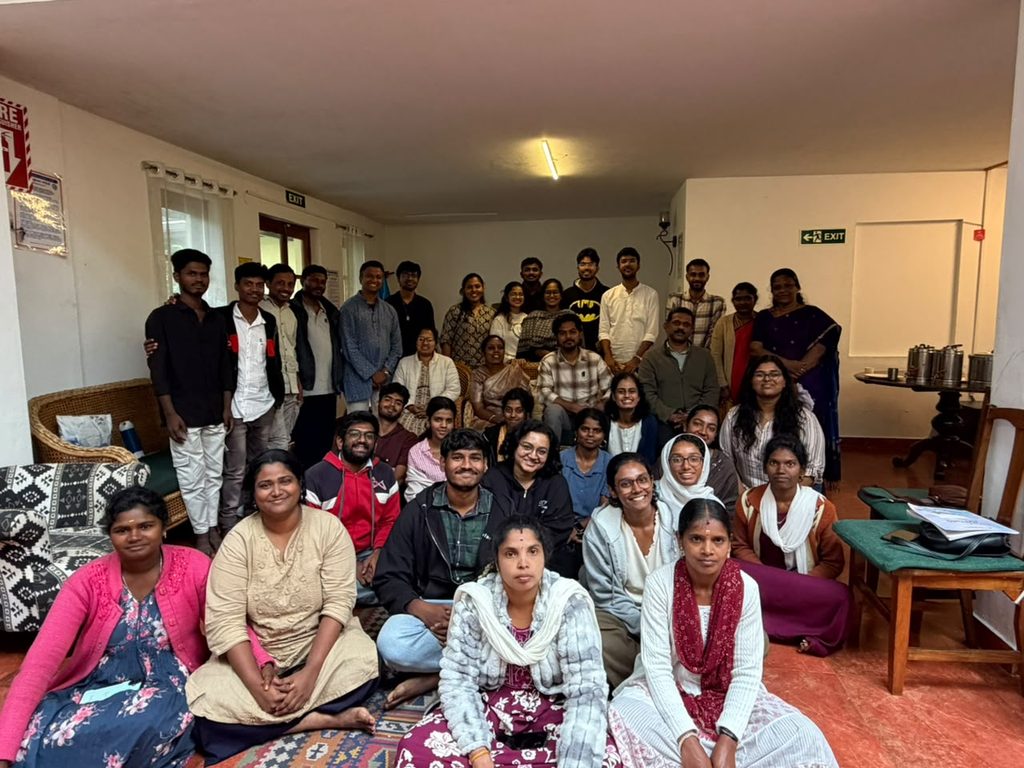
Mandatory group photo taken during the RSP at Kodaikanal’26