

Where the Road Ends: Reflections from Durmusi, Kalahandi
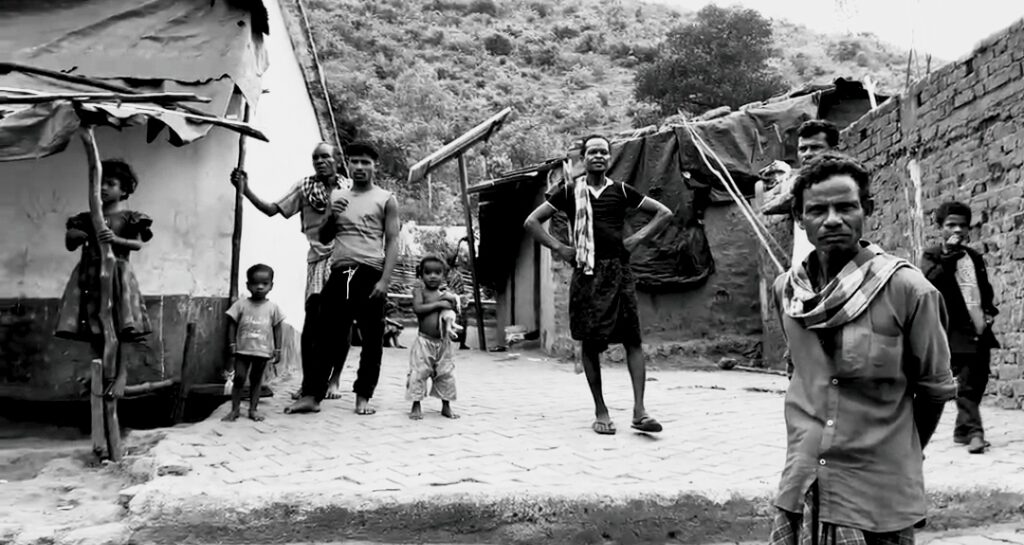
The Village That Time Forgot
There are journeys that add memories to your life.
And then there are journeys that quietly change the way you look at the world.
Durmusi was one of them.
Hidden in the hills of Thuamul Rampur in Odisha’s Kalahandi district, Durmusi is home to nearly seventy households and around two hundred to three hundred people. It is not a place tourists visit. It is not a place that appears in headlines. It exists quietly, almost forgotten, surrounded by forests and hills that make the rest of the world feel impossibly far away.
During the Swasthya Swaraj STEP programme, we travelled there not as tourists or researchers, but as students hoping to understand what health truly means beyond hospital walls.
Every step took me farther from the noise of cities and closer to a reality that no textbook had prepared me for.
The first building I noticed was the village school.
At least, that was what it had once been.
The classrooms were filled with cow dung. Cows and buffaloes rested where children should have been sitting with notebooks in their hands. The blackboard stood empty, as if waiting for someone who had stopped coming years ago.
There were no students.
There were no teachers.
Only silence.
Standing there, I kept wondering how a school stops being a school. Not overnight, but little by little, one absent teacher, one child dropping out, one forgotten promise at a time, until eventually education disappears, leaving only walls behind.
As we walked further into the village, people welcomed us with warm smiles.
Children peeked from behind mud walls before gathering around us. Elderly women invited us to sit. Men returned from work carrying bundles of firewood.
Life here moved slowly.
Not because people chose it.
Because geography had chosen it for them.
I noticed many adults drinking toddy. Someone explained that it was woven into daily life, consumed almost routinely.
From the outside, it would be easy to dismiss this as addiction.
But standing there, judgment felt misplaced.
When opportunities are scarce, education has disappeared, employment is uncertain, and tomorrow looks exactly like yesterday, perhaps toddy becomes more than a drink.
Perhaps it becomes relief.
Perhaps it becomes escape.
Or perhaps it simply becomes normal.
And that thought disturbed me far more than the drink itself.
_________________________________________________________________________________________________________
The Eyes I Could Not Forget
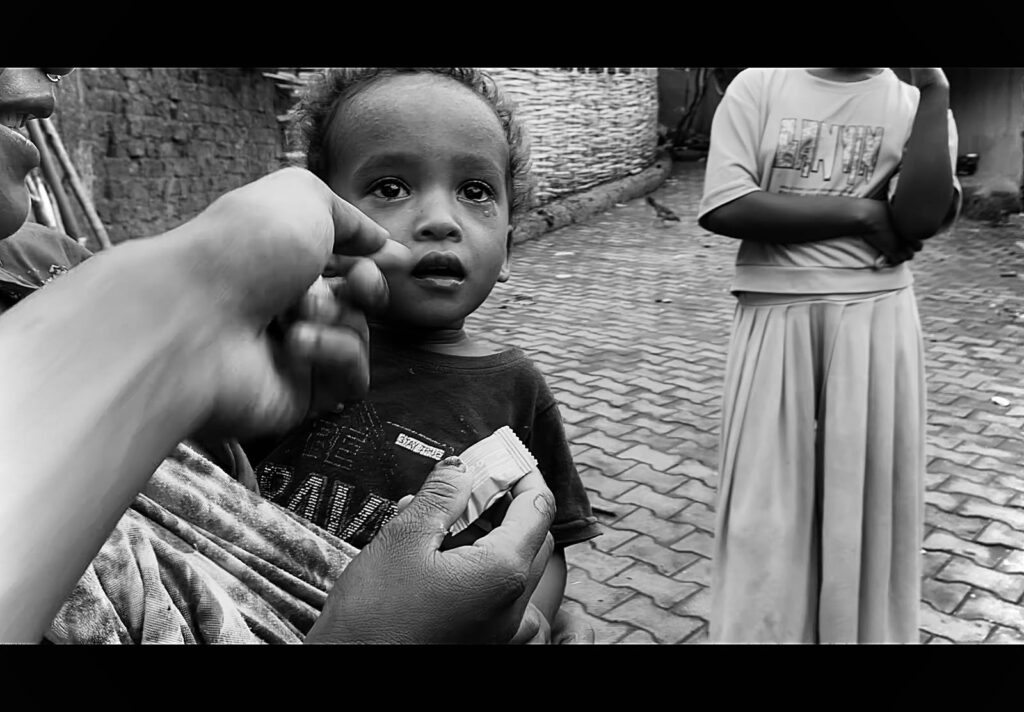
Children slowly gathered around us as we walked through the village…..
Some hid behind their mothers.
Some watched us curiously from a distance.
Others stood silently, their eyes following every movement we made.
I handed a small toffee to a little boy.
His tiny fingers reached forward hesitantly. He looked straight into my eyes, and for a brief moment the world around us disappeared.
There was no excitement.
No laughter.
No words.
Only a quiet gaze that carried an innocence too deep for me to understand.
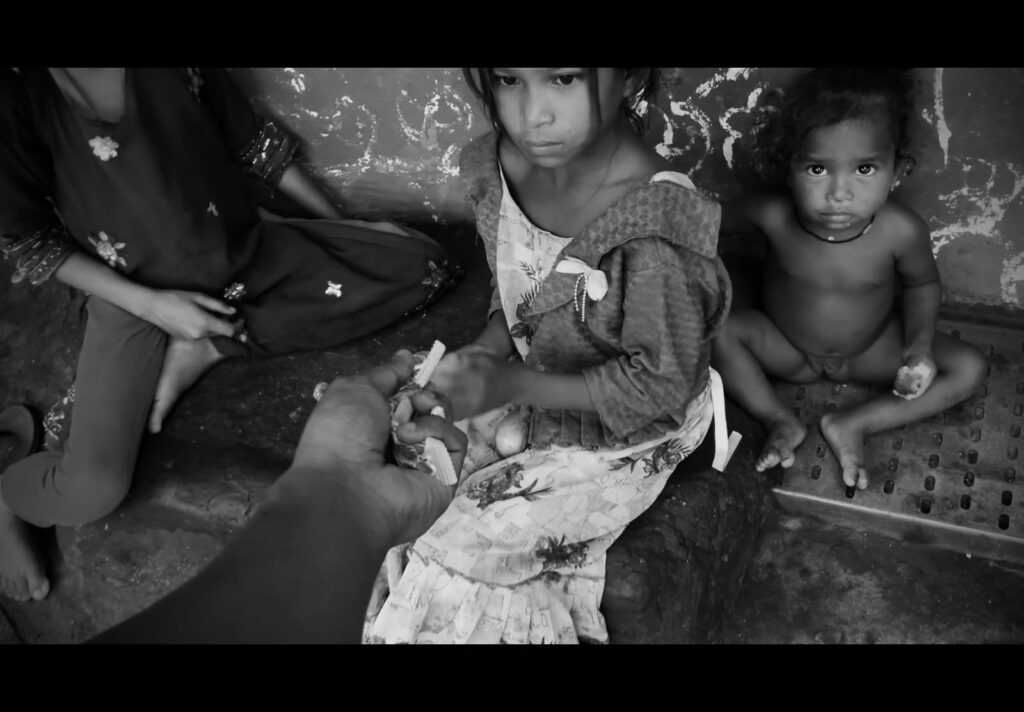
Another little girl accepted a toffee just as gently. Instead of opening it immediately, she simply held it close, as though even a small gift deserved to be treasured.
I have studied malnutrition.
I know its classifications, complications and treatment protocols.
But no lecture had prepared me for the feeling of wondering whether the packet of biscuits in my hand might become one of the happiest moments in a child’s day.
Medicine often teaches us to look for symptoms.
That day, I learned to look into people’s eyes.
Because sometimes eyes tell stories that laboratory reports never can.
Source: Photo taken during STEP Programme at Swasthya Swaraj, Kalahandi
When Healthcare Begins Before the Hospital
Before visiting Durmusi, I believed healthcare began at hospitals.
I was wrong.
Healthcare begins long before a patient reaches a doctor.
The nearest Primary Health Centre lies nearly two to three hours away on foot. There are no roads that ambulances can easily navigate. The journey involves climbing steep hills, crossing uneven paths and walking through forests.
An elderly woman pointed toward the hills. ‘The hospital is beyond those mountains,’ someone translated. When she falls sick, her grandson carries her on his back. Not because he wants to, but because there is simply no other way.
Young men carry their parents and grandparents on their backs.
Not for a few hundred metres.
For hours.
Imagine carrying the weight of someone you love across hills while knowing that every passing minute matters.
In cities, we complain when an ambulance arrives ten minutes late.
In Durmusi, people first have to reach the road.
As we prepared to leave, the children stood watching us. Some smiled. Some waved. Others simply stared until we disappeared beyond the bend.
I carried my backpack back to the vehicle.
But I also carried something far heavier….
Questions.
Questions about justice.
Questions about equality.
Questions about what it truly means to become a doctor.
What is healthcare when a patient cannot reach the hospital?
What does informed consent mean when education never reached the village?
Can we speak of universal healthcare when geography decides who survives?
As our jeep disappeared beyond the hills, I looked back one last time. The children were still standing where we had left them, waving until we were out of sight. They probably forgot us by evening. I know I will never forget them.
Durmusi taught me about neglect.
It reminded me that the greatest illness affecting many remote communities is not merely malaria, tuberculosis or anaemia.
It is invisibility.
As future doctors, we often dream of mastering surgeries, interpreting scans and treating rare diseases.
But perhaps our first responsibility is much simpler.
To see those whom the world has forgotten.
Because the true measure of a healthcare system is not found in its biggest hospitals.
It is found in villages like Durmusi, where the road ends—but humanity continues.
Source: Photo taken during STEP Programme at Swasthya Swaraj, Kalahandi
About the Author
These reflections are shared by Devanshu Gupta, an MBBS Student from Government Medical College, Korba, Chhattisgarh